


 Deutsch
 English
 Español
 Français
 Nederlands
 Português


 Share
Share




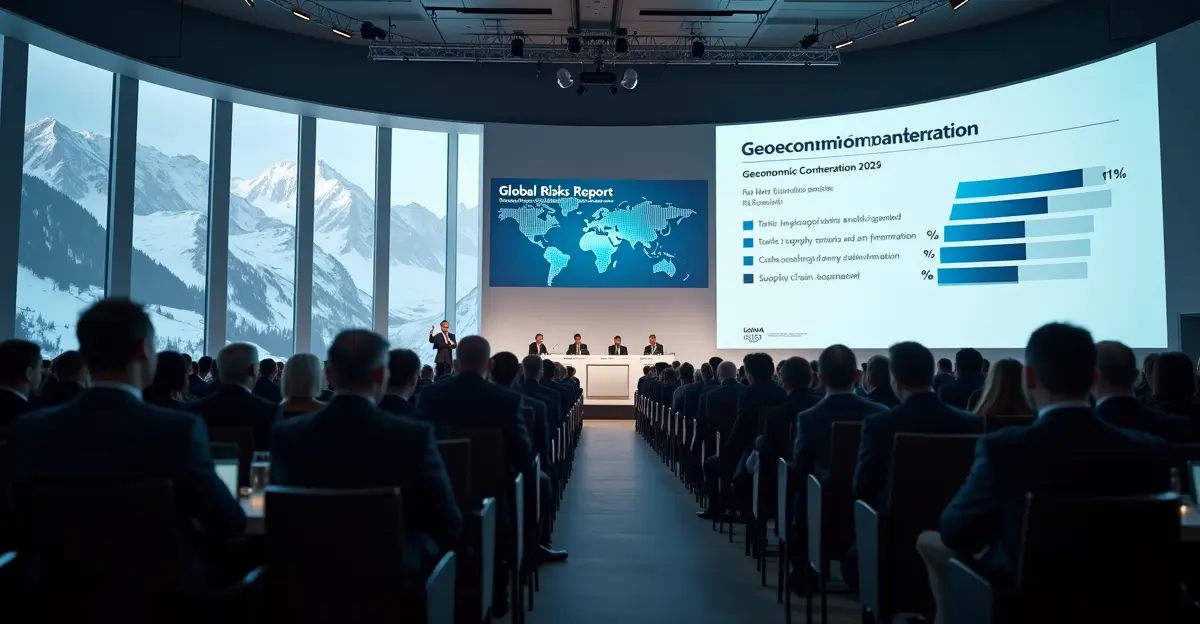
In January 2026, the World Economic Forum's Global Risks Report ranked geoeconomic confrontation as the top global risk for the first time, surpassing armed conflict and extreme weather. This shift marks a watershed moment for global trade, as US tariffs on Chinese imports have reached 54% (with China retaliating at 34%), while the European Union's Carbon Border Adjustment Mechanism (CBAM) entered its definitive phase on January 1, 2026. Multinational corporations are now building parallel 'triple redundancy' supply chains across North America, Europe, and Asia, raising manufacturing costs by 15–25% and forcing strategic realignments that will define corporate strategy for years to come.
What Is the Triple Redundancy Supply Chain Strategy?
Triple redundancy refers to the practice of maintaining three separate production and logistics networks—one in each major economic bloc: North America (US-led), Europe (EU-led), and Asia (China-led). Unlike the just-in-time (JIT) model that prioritized cost efficiency, triple redundancy prioritizes resilience against geopolitical disruption. Companies are duplicating manufacturing capacity, warehousing, and supplier relationships across all three regions, effectively insuring against tariffs, export controls, and supply chain decoupling. The cost premium of 15–25% is now viewed as an unavoidable insurance premium in an era of strategic competition.
Three Converging Policy Shocks in 2026
US-China Tariff Escalation at Historic Highs
The US-China trade war has intensified dramatically. US tariffs on Chinese imports now stand at 54%, with China retaliating at 34%. These rates represent the highest levels since the trade war began in 2018. The US has also tightened semiconductor export controls through the MATCH Act, while China has restricted exports of rare earth minerals critical for defense and green technologies. Bilateral trade between the world's two largest economies has fallen roughly 30% from its peak, with over $165 billion in trade flows redirected to third countries. Vietnam, India, and Mexico have emerged as the primary nearshoring beneficiaries, capturing a significant share of relocated production.
EU's CBAM Enters Force
On January 1, 2026, the EU's Carbon Border Adjustment Mechanism entered its definitive phase, imposing carbon costs on imports of cement, iron and steel, aluminium, fertilizers, electricity, and hydrogen. Importers must now purchase CBAM certificates at prices linked to the EU Emissions Trading System (Q1 2026: €75.36 per tonne of CO₂). The steel sector alone accounts for over 81% of projected costs, potentially exceeding €12 billion in 2026. CBAM affects approximately €50 billion in annual EU imports and is already triggering policy responses worldwide, with Canada, the UK, Australia, and the US exploring similar border carbon adjustments.
WEF Global Risks Report 2026: Geoeconomic Confrontation Tops the List
The WEF's 2026 report, based on a survey of over 1,300 global experts, found that 68% of respondents expect a multipolar or fragmented global order over the next decade. Half described the short-term outlook as 'turbulent' or 'stormy.' Economic risks surged significantly, with downturn and inflation both climbing eight positions year-on-year. The report warns that geoeconomic confrontation—fueled by tariffs, regulations, supply chains, and capital constraints—could lead to a substantial contraction in global trade. Global trade fragmentation is no longer a theoretical risk but a present reality.
How Multinationals Are Adapting
Major multinationals across semiconductors, batteries, electric vehicles, pharmaceuticals, and critical minerals are restructuring their global footprints. The shift from efficiency to resilience is driving three key trends:
- Nearshoring and friendshoring: Production is moving to geopolitically aligned countries. US companies are expanding in Mexico and India; European firms are prioritizing Eastern Europe and North Africa; Chinese companies are deepening ties with Southeast Asia and the Global South.
- Inventory stockpiling: Companies are holding 30–50% more inventory than pre-pandemic levels to buffer against supply disruptions.
- Regionalized R&D and supplier networks: Rather than relying on a single global hub, firms are building parallel innovation ecosystems in each bloc.
According to McKinsey, companies investing 3–5% of annual supply chain spend on resilience achieve a risk-adjusted ROI of 150–300% over three years. The cost of supply chain resilience is increasingly seen as a strategic investment rather than a pure cost burden.
Impact on Inflation and Growth
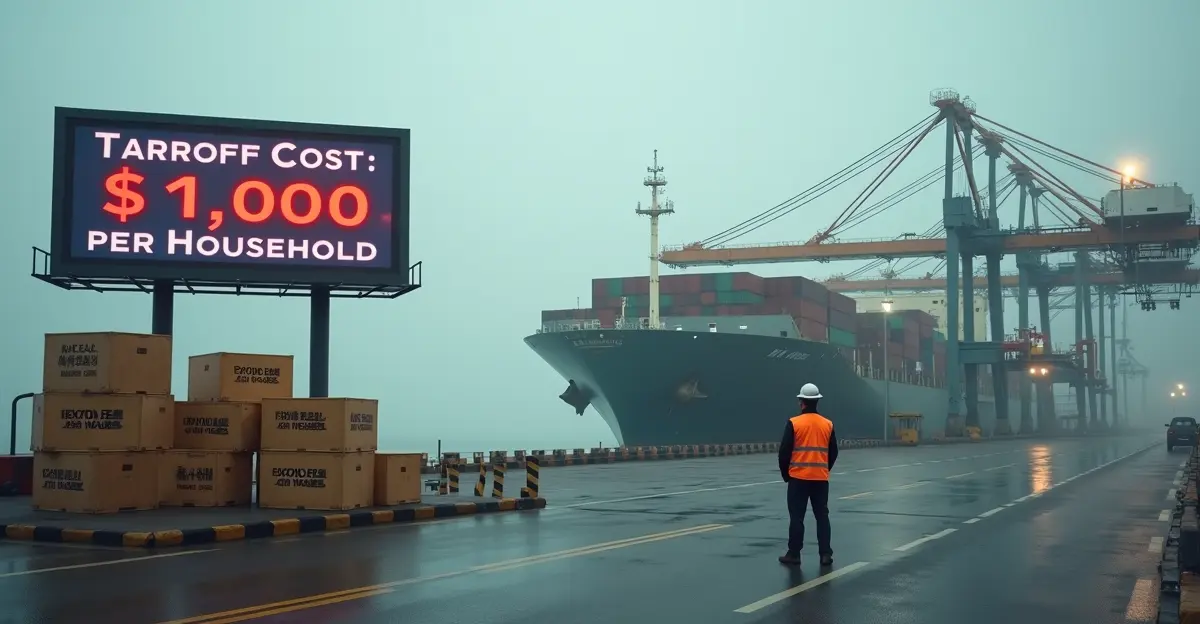
The triple redundancy strategy is contributing to persistent inflationary pressures. Manufacturing costs have risen 8–12%, transportation expenses have increased 15–20%, and US consumers are bearing roughly $1,000 per household in added tariff costs. The IMF projects global growth at 3.3% for 2026, but warns that trade policy headwinds pose significant downside risks. China's growth is forecast at 4.2–4.5%, while the US faces more gradual inflation normalization. The IMF recommends that policymakers restore fiscal buffers, preserve price stability, and pursue structural reforms to enhance resilience.
Expert Perspectives
'The triple redundancy economy is a permanent restructuring of global production, not a temporary adjustment,' says Haruto Yamamoto, a geopolitical economist. 'Companies that fail to build parallel supply chains will find themselves locked out of entire markets. The era of a single, efficient global supply chain is over.'
The WEF report echoes this sentiment, noting that nearly 18,000 discriminatory trade measures have been enacted since 2020. South-South trade has surged from $0.5 trillion in 1995 to $6.8 trillion in 2025, as emerging economies seek to build alternative trade corridors. Emerging economy trade realignment is creating new opportunities for middle powers like India, Vietnam, and Brazil to position as connectors between blocs.
Frequently Asked Questions
What is geoeconomic confrontation?
Geoeconomic confrontation refers to the use of economic tools—tariffs, export controls, sanctions, and investment restrictions—as instruments of strategic competition between nations. It was ranked the top global risk for 2026 by the WEF.
How does triple redundancy affect consumers?
Triple redundancy raises manufacturing costs by 15–25%, which is passed on to consumers through higher prices. US households are estimated to bear an additional $1,000 per year in costs due to tariffs alone.
Which countries benefit from supply chain fragmentation?
Vietnam, India, and Mexico are the top nearshoring winners. Middle powers like Brazil, Indonesia, and Turkey are also attracting diversified investment as companies seek to reduce dependence on any single bloc.
What is the EU's CBAM and why does it matter?
CBAM is a carbon border tax that imposes costs on imports based on their embedded emissions. It entered force in January 2026, covering steel, cement, aluminium, fertilizers, electricity, and hydrogen. It aims to prevent carbon leakage and incentivize cleaner global production.
Will global trade recover from fragmentation?
Most experts expect fragmentation to deepen. The IMF projects 3.3% growth in 2026, but warns that escalating trade barriers could reduce global GDP by 1–2% over the medium term. The shift toward regional blocs appears structural rather than cyclical.
Conclusion: A New Era of Strategic Competition
The convergence of US-China tariff escalation, the EU's CBAM, and the WEF's risk assessment signals that geoeconomic confrontation is the defining strategic challenge of 2026. The triple redundancy trap—where companies must maintain parallel supply chains at significantly higher cost—is reshaping corporate strategy, inflation dynamics, and long-term growth prospects. For developing economies, the challenge is to navigate between competing blocs without becoming collateral damage. For multinationals, the imperative is clear: resilience now trumps efficiency. The global economy is entering a new era of strategic competition, and the future of global trade governance will determine whether fragmentation leads to stagnation or a more balanced multipolar order.
Sources
- World Economic Forum, Global Risks Report 2026, January 2026
- European Commission, CBAM enters into force, January 14, 2026
- IMF, World Economic Outlook Update, January 2026
- McKinsey Global Institute, Geopolitics and the Geometry of Global Trade, 2026
- Tax Foundation, Tariff Tracker, 2026
- Informed Clearly, Triple Redundancy Economy Analysis, 2026

Follow Discussion